How Does a Centrifugal Pump Work? Explained Simply…
How Does a Centrifugal Pump Work? Explained Simply…If you’ve ever used a heating system, operated industrial equipment, or turned on a tap, you’ve relied on a centrifugal pump, even if you didn’t realise it.
Centrifugal pumps are one of the most widely used forms of industrial liquid handling equipment in the world. They’re trusted across manufacturing, HVAC, water treatment, aquaculture, chemical processing and countless other sectors because they offer reliable, continuous and efficient fluid movement.
But despite being so common, many people still aren’t entirely sure what actually happens inside one.
In this guide, we’ll explain how a centrifugal pump works in straightforward terms, break down the key components, and outline why correct pump selection matters so much in industrial environments.
What is a Centrifugal Pump?
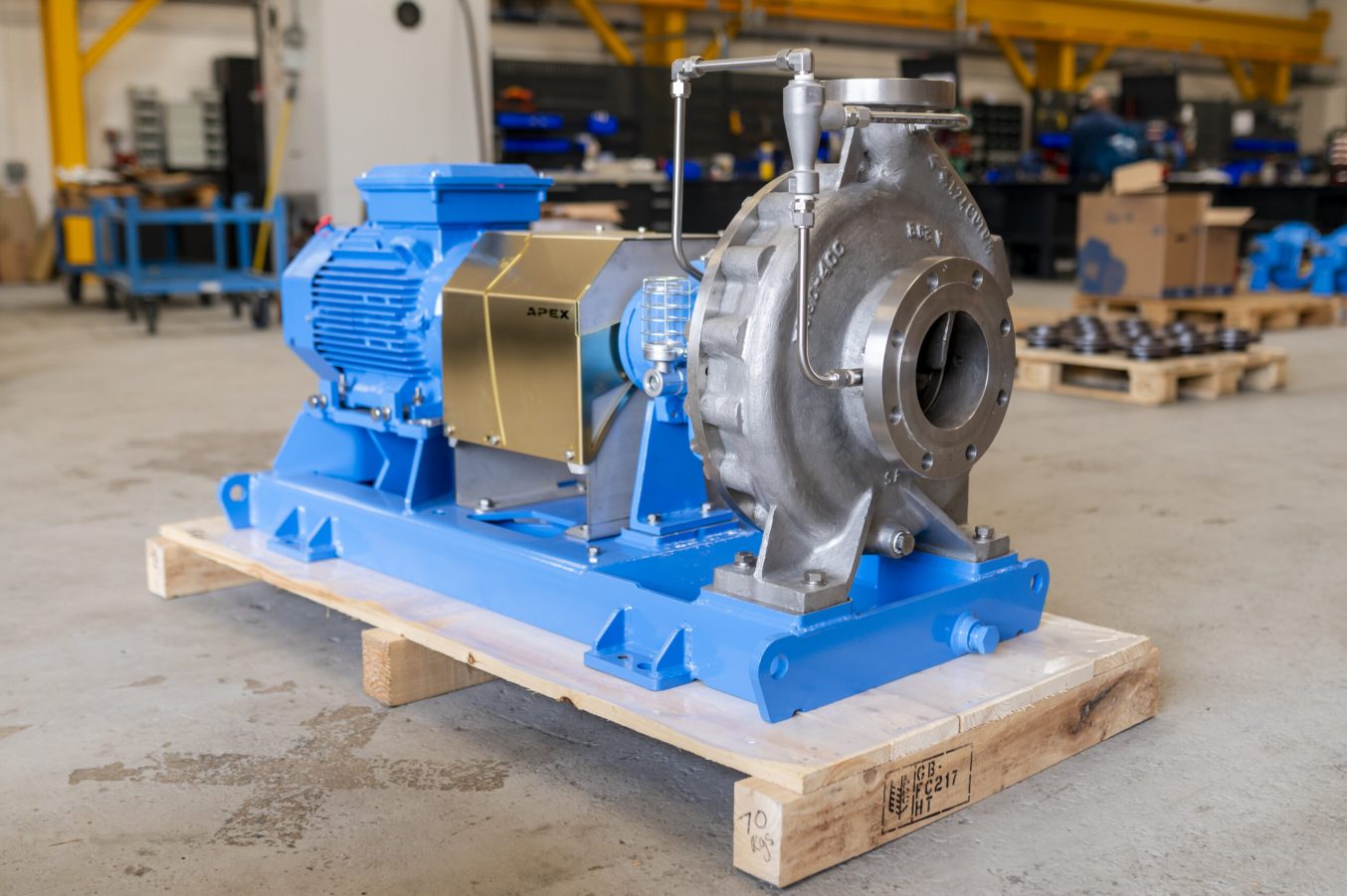
A centrifugal pump is a mechanical device used to move liquid by converting rotational energy into fluid flow and pressure.
Unlike positive displacement pumps, which physically push liquid through a system, a centrifugal pump uses a rotating impeller to accelerate liquid outward using centrifugal force.
This creates a smooth, continuous flow, making centrifugal pumps ideal for high-flow industrial applications.
The Basic Principle Behind a Centrifugal Pump
The operating principle is actually very simple.
As the impeller spins, liquid enters through the centre of the pump and is accelerated outward at high speed. The pump casing then converts this velocity into pressure, allowing the liquid to travel through the system.
Think of it like spinning a bucket of water in a circle, the water is forced outward away from the centre of rotation. A centrifugal pump applies this same principle in a controlled and engineered way.
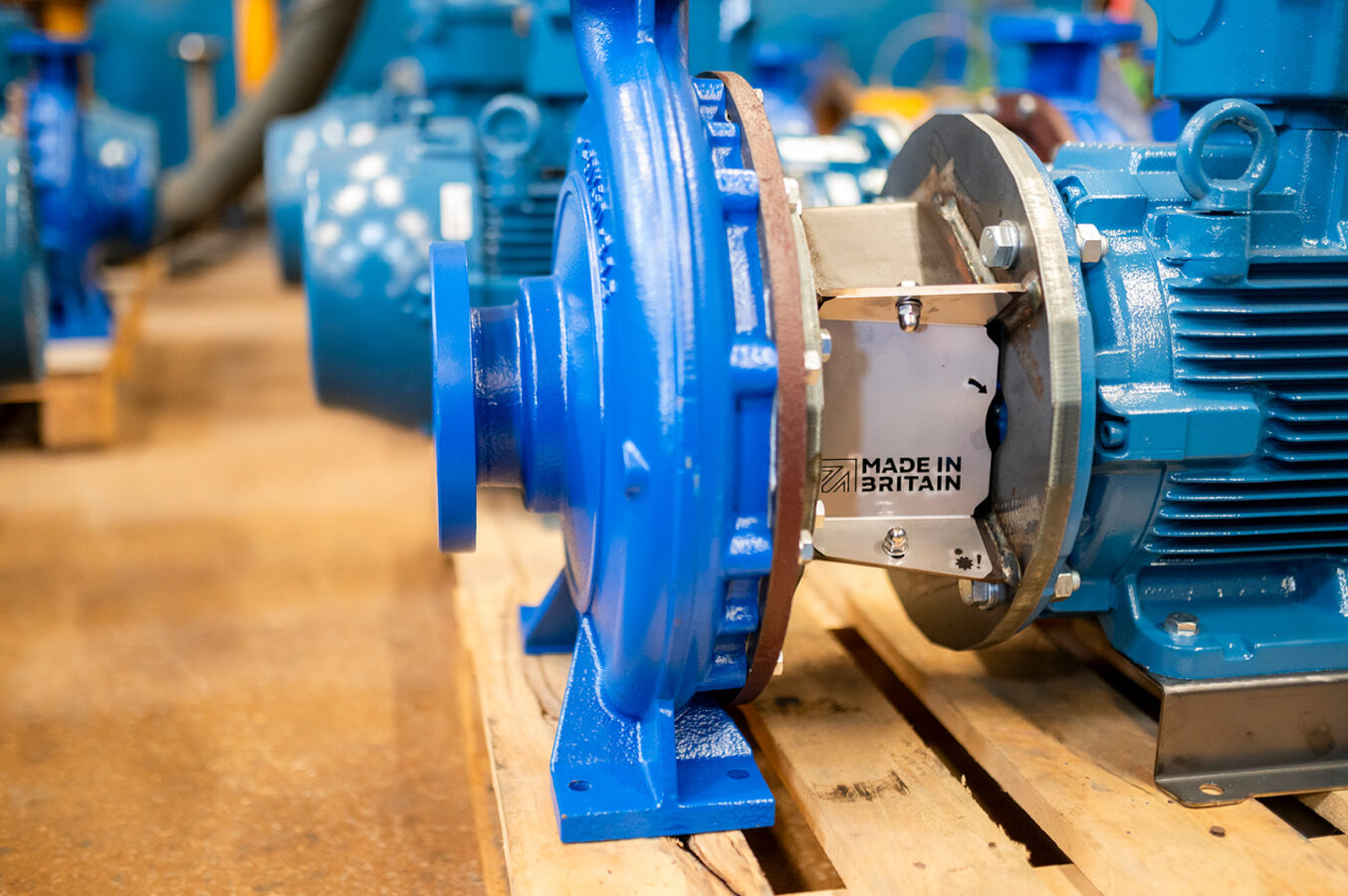
The Main Components of a Centrifugal Pump:
1. Impeller
The impeller is the heart of the pump. Connected to the motor by a shaft, it rotates at high speed and transfers energy into the liquid.
Its design, including diameter, vane angle and vane quantity, directly affects pump performance, flow rate and pressure generation.
2. Volute Casing
The casing surrounds the impeller and guides the liquid through the pump.
Most centrifugal pumps use a spiral-shaped volute casing, which gradually widens as the liquid moves through it. This reduces liquid velocity and converts kinetic energy into pressure energy.
3. Suction Inlet
Liquid enters the pump through the suction inlet at the centre of the impeller.
As the impeller rotates, it creates a low-pressure area that draws liquid into the pump.
4. Discharge Outlet
Once pressure has been generated inside the casing, the liquid exits through the discharge port and continues into the downstream pipework.
5. Shaft and Bearings
The shaft transfers rotational force from the motor to the impeller, while bearings support alignment and minimise friction.
Reliable bearing performance is essential for long-term pump durability.
6. Mechanical Seals
Mechanical seals prevent liquid leakage where the rotating shaft passes through the casing.
In industrial applications, seal reliability is critical for both efficiency and operational safety.
Step-by-Step: How does a centrifugal pump work?
The operating cycle follows six simple stages:
- The motor rotates the shaft and impeller.
- Liquid enters through the suction inlet.
- The impeller accelerates the liquid outward.
- Velocity increases as the liquid moves through the pump.
- The volute casing converts velocity into pressure.
- Pressurised liquid exits through the discharge outlet.
This continuous process allows centrifugal pumps to deliver smooth, efficient and reliable operation across a huge range of industrial applications.
Where Are Centrifugal Pumps Used?
Centrifugal pumps are incredibly versatile and can be configured for many different environments and liquid types.
At Apex Pumps, our pumps are used across sectors including:
- Water treatment and distribution
- HVAC and building services
- Aquaculture and fish farming
- Industrial manufacturing
- Chemical processing
- Seawater and marine applications
The key to reliable performance is ensuring the pump is correctly specified for the application.
Why Are Centrifugal Pumps So Popular?
Centrifugal pumps remain the industry standard for several reasons:
High Flow Capability
They can move large volumes of liquid efficiently and continuously.
Simple Construction
Fewer moving parts generally means reduced maintenance requirements and lower operating costs.
Smooth Operation
Continuous flow minimises vibration and stress within the pipework system.
Versatility
With the correct materials and seal arrangements, centrifugal pumps can handle clean water, aggressive chemicals, seawater and more.
Scalability
They are suitable for everything from compact commercial systems through to major industrial installations.
Does Pump Quality Matter?
Absolutely.
A centrifugal pump is often one of the hardest-working components in any industrial system. When it fails unexpectedly, the consequences can extend far beyond the cost of the pump itself.
Downtime, production disruption, emergency maintenance costs and secondary equipment damage can all quickly escalate.
That’s why build quality, engineering standards and correct specification matter.
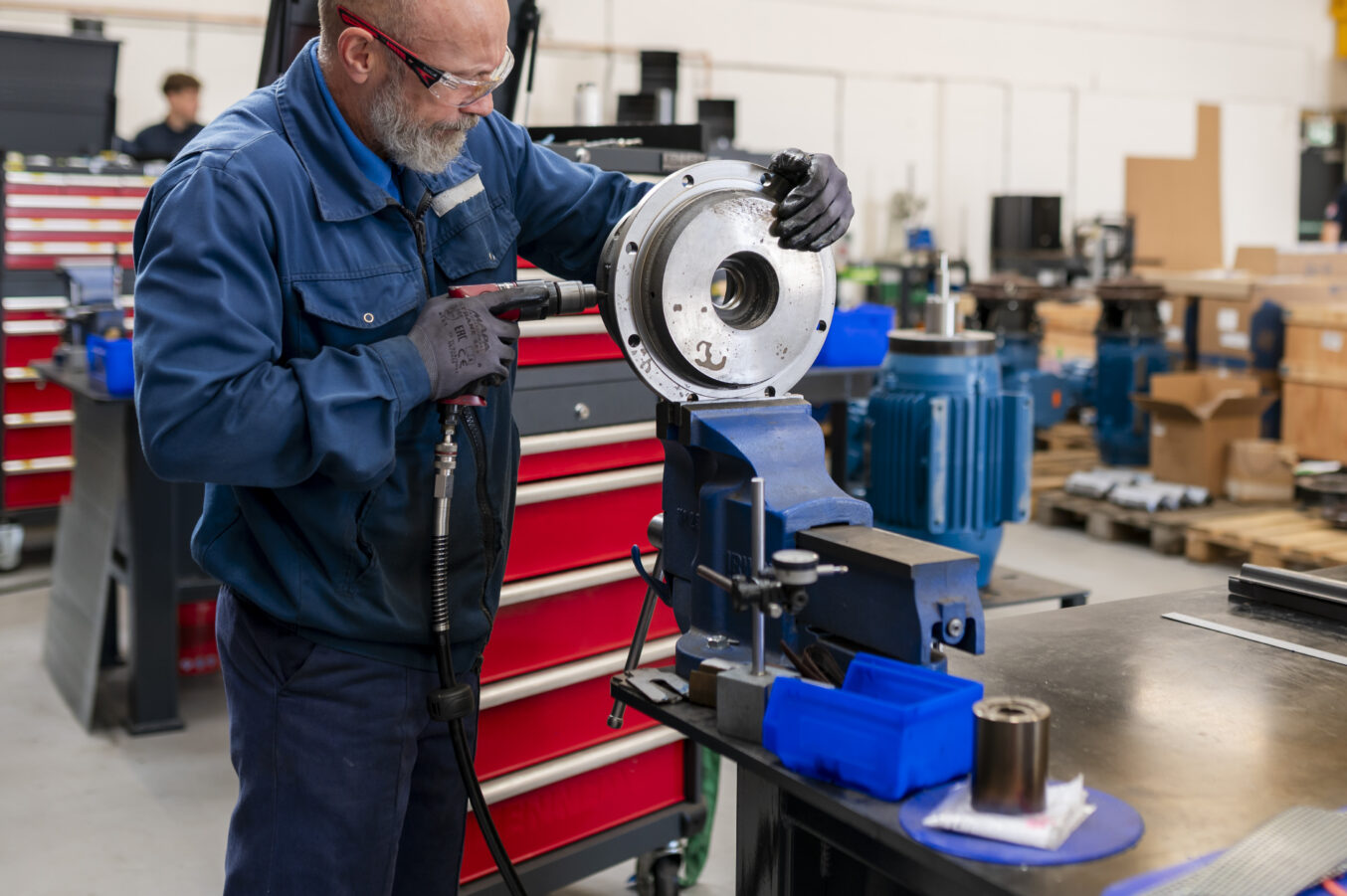
At Apex Pumps, every pump is designed and manufactured at our Bristol facility and tested to ISO 9906 standards before leaving the factory. With more than 35 years of engineering experience, we focus on delivering long-term reliability in demanding industrial environments.
Choosing the Right Centrifugal Pump…
Selecting the right pump starts with understanding the application requirements.
Important considerations include:
- Required flow rate
- Total head pressure
- Liquid type and viscosity
- Operating temperature
- Material compatibility
- Installation layout
A correctly specified pump will operate more efficiently, last longer and reduce overall maintenance costs.
Final Thoughts…
Centrifugal pumps work by converting rotational energy into fluid movement and pressure using a spinning impeller and a carefully designed casing.
While the principle is straightforward, achieving reliable, efficient performance depends heavily on correct engineering, specification and manufacturing quality.
Whether you’re designing a new system or replacing an existing pump, selecting the right solution at the outset can save significant operational time and cost further down the line.
If you’d like advice on selecting the right centrifugal pump for your application, speak to the Apex Pumps team today.
Designed and manufactured in Bristol, UK. Built for industry.
Similar Posts
-
Pump Downtime Costs
The cost of a pump Downtime doesn’t stop at the pump. When a critical pump goes down, the…
-
Why Reshoring Matters
As global supply chains continue to evolve, manufacturers across the engineering sector are increasingly recognising the benefits of…
-
Spring/ Summer 2026 update
Here’s a look at what we’ve been up to over the last few months – and more importantly, how it helps us continue delivering the very best support and solutions for our customers.